

When I was in fourth grade, my house burned down. No one was hurt thankfully, despite the fire starting at 1 a.m. when we were all asleep in a very old house that had no smoke alarm. The next year was spent rebuilding that house. Every day after my mom, brother and I finished school (my mom was a teacher), we’d stop by the site to see the progress. The frame going up, walls taking shape, the house slowly returning.
I didn’t understand much about construction at that age, but I do remember the scene on our front lawn: my parents and Steve, our General Contractor (GC), huddled at a makeshift table surrounded by binders, plans, and stacks of paper.
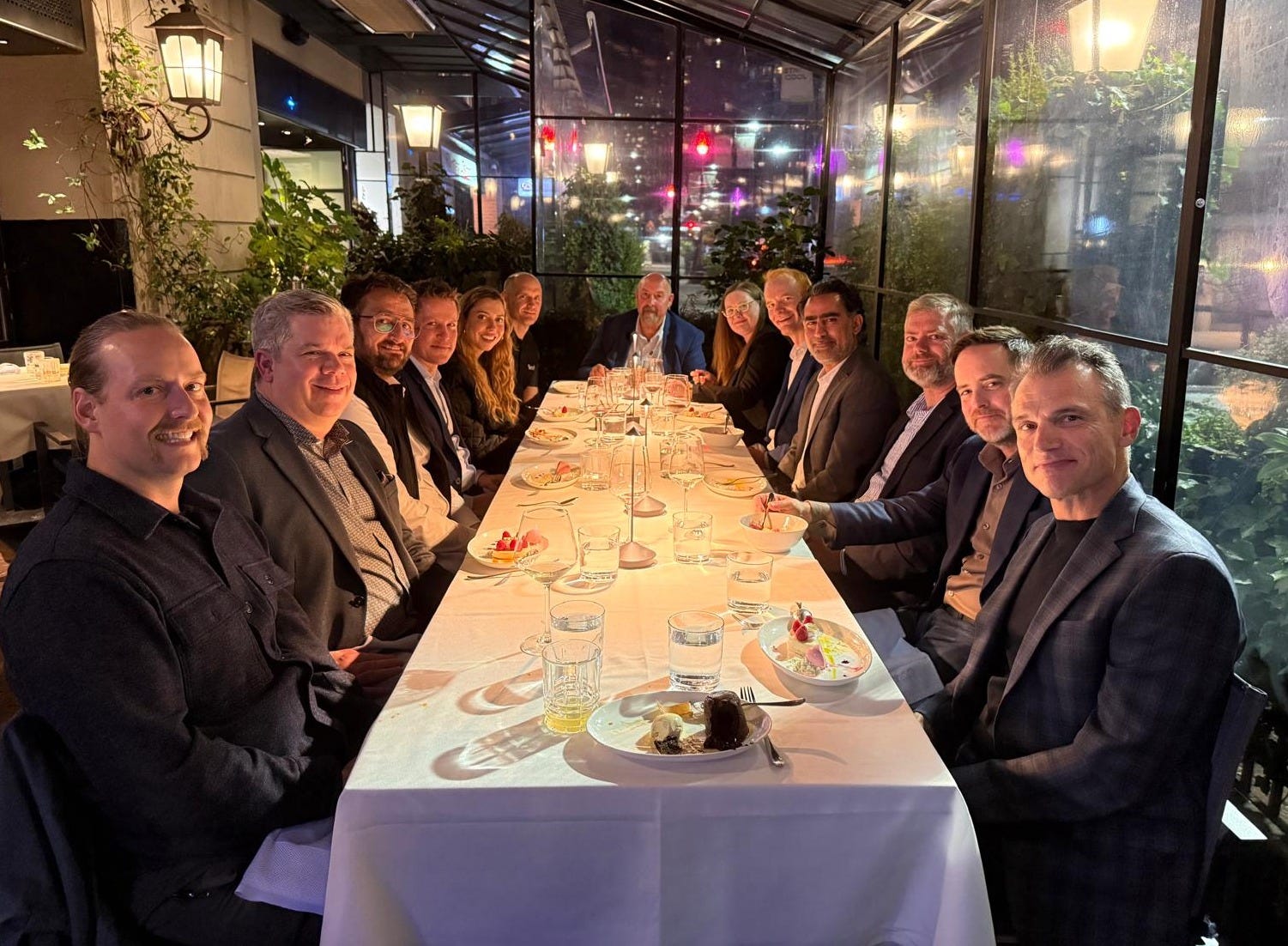
I thought about that memory recently as I’ve been spending more time trying to understand what’s been changing in the construction industry over the past two decades, both in commercial and residential. I went to the ICBA conference in Vancouver a couple months ago and hosted a dinner with 12 GCs. At that dinner was Reza Norozy, Chief Operating Officer at Prism Construction.
Reza has spent more than 20 years in the industry, starting in engineering design before moving into management and operations. Today he’s responsible for making Prism’s operations not just efficient, but scalable, which means aligning field teams, office staff, and leadership around shared goals and processes.
“It’s not only about building faster,” he told me. “It’s about building smarter.”
This week, I sat down with Reza to talk about how a modern construction COO thinks about technology, AI, and the hybrid workforce that’s coming. What stood out in my conversation with Reza is his framing of the future: not automation and not replacement, but rather a hybrid model where AI becomes a “decision-support partner” to the people doing the work.
From Engineering Design to Operations Leader
Reza didn’t stumble into construction tech; he came up through the work itself.
His background is in engineering design, followed by management studies. That cross-disciplinary foundation (technical plus operational) eventually helped elevate him into the COO role, where strategy, execution, and people converge. “My role is to ensure that our operations are not just efficient, but also scalable,” he said. “I oversee daily operations, but I’m also involved in strategic planning and decision making. I work to align our field and office teams and leadership around shared goals and processes.”
What drew him to construction in the first place was the tangible nature of the work: watching a drawing or model become a building people actually use. “When you see a vision on paper become a physical space, that’s incredibly rewarding,” he told me.
When he started out more than twenty years ago, he described the industry as “more siloed and analog.” Today, the shift is clearly around more data, more collaboration, and more technology woven into the daily rhythms of projects. But the way Prism has approached that shift has been very intentional.
The Tech That Actually Matters on Site
Prism’s bar for new technology is simple: does this solve a real problem and make the team more effective?
A few categories have earned their place in the stack:
Cloud-based document management: Everyone (from project managers in the office to superintendents in the field) works from the same up-to-date drawings and specs. This has eliminated a huge source of friction and rework.
Real-time budget dashboards: Instead of periodic financial check-ins, Prism now monitors project budgets continuously. These dashboards act as early warning systems when something drifts off track, giving teams time to intervene before it becomes a crisis.
Mobile safety inspection checklists: These have replaced a lot of manual paperwork while also strengthening safety compliance. Field teams can complete inspections on the go, and the data is immediately captured and visible across the organization.
And yet, even with this progress, big parts of the workflow are still painfully manual.
For example, “change orders and variance tracking are still very manual,” Reza noted. “There are solutions in the market, but adoption and integration are the main challenges.”
That last point is key. The tech exists, but doesn’t fit how people actually work – or doesn’t fit well enough to overcome the friction of change.
One of Reza’s core beliefs is that “the best technology is adopted, not implemented.”
Why Adoption Fails (and How to Fix It)
Reza shared a story about a comprehensive reporting tool Prism tried to roll out years ago. On paper, it looked great, but in practice, it failed. “The field teams found it too rigid and cumbersome,” he said. “It didn’t match their daily routines. Adoption lagged, and people went back to their original methods.”
Reza believes technology adoption has to be empathetic. You have to design around real workflows, not idealized ones.
A few principles he’s taken from that experience:
Involve end-users early: Don’t select and configure tools in a conference room and then drop them on the field. Bring the people who will actually use the tool into the process from the start.
Training is necessary but not sufficient: Prism used to focus heavily on training. Now, training is paired with listening and simplification, adjusting workflows based on feedback rather than assuming the first design is correct.
Start small, then customize and scale: Today, Prism frequently starts with smaller teams, gathers feedback, customizes workflows, and only then rolls out more broadly.
It’s a shift from top-down implementation to bottom-up partnership, and reflects a more iterative approach to implementing technology in an industry where adoption has to match the rhythms of daily work.
Construction Is Still a People Business
Throughout our conversation, Reza kept emphasizing that “construction is fundamentally about people.”
Human expertise is still irreplaceable. The situational judgment on site, the relationships with clients and trade partners, the coordination among dozens of stakeholders. “You can’t fully replace that with digital tools,” he told me.
Instead, his mental model is that technology should augment human expertise, not erase it. For example, “we provide mobile checklists and dashboards so field teams have better visibility and can make informed decisions,” he said. “But we trust them to apply their own judgment. We don’t want technology to eliminate communication. It should enhance it.”
Predictive Insights and Decision-Support Partners
When I asked Reza where AI can have the biggest impact, he immediately pointed to one idea: predictive insights. Not automation for its own sake, but technology that helps teams anticipate issues and make smarter decisions.
He sees three especially promising application areas:
Estimating: AI can analyze historical project data, subcontractor performance, material costs, and local conditions to generate more accurate, dynamic estimates. That reduces risk and allows contractors to price more competitively.
Scheduling: AI can model potential delays from weather, material delivery, and labor availability, then suggest proactive mitigation plans. Instead of reacting to problems once they’re visible, teams can plan around them.
Safety and Quality: AI can analyze site photos, inspection reports, and environmental data to identify emerging safety or quality issues before they become critical.
“It’s not just the automation piece that I’m excited about,” Reza said. “It’s the insight, the ability to anticipate issues and allocate resources more strategically.”
Reza doesn’t see AI as a fully autonomous decision-maker, especially not in an industry where mistakes can carry serious safety, financial, and reputational consequences. At the same time, he believes AI will go far beyond basic assistance.
In his view, a good system will:
Forecast risks
Generate options and scenarios (e.g. schedule adjustments, resource allocation plans)
Help teams weigh tradeoffs
The final decision, especially in high-stakes contexts, needs to remain with experienced professionals.
He calls this type of system a “decision-support partnership”.
Over time, as data quality improves and models become more sophisticated, the partnership gets deeper. But it remains a partnership.
Don’t Forget the Robots
Reza sees AI as the “brain” of the new construction stack, but believes robotics will play just as big a role as the “hands,” especially on site. He expects robotics to materially change how on-site work gets done within the next five years.
That doesn’t mean humanoid robots swinging hammers; it means more specialized, task-specific systems that can handle repetitive or dangerous work, coordinated by AI and human supervisors.
He expects that robotics will likely show up first in highly targeted applications: layout automation, material handling, site scanning, hazardous inspections, and other jobs that are physically demanding or high-risk.
In his view, the real transformation happens when AI’s predictive capabilities meet robotics’ physical execution. For example, when models can flag risks or generate scenarios, and robots can help carry out the work more safely and consistently. “Robotics will change the way we do things on site,” he told me. “We will see it very soon. Within a few years, not decades.”
How a COO Evaluates AI Startups
Like many operators today, Reza is getting pitched by AI startups constantly. He’s looking for a few concrete things in those pitches:
Real pain relief: The solution must directly address problems his teams actually feel (manual change orders, variance tracking, schedule risk, safety exposure). In other words, the solution must start with some acute problem that his team is feeling today. It doesn’t need to be an all encompassing solution on day 1.
Workflow alignment: If a tool is not intuitive or doesn’t align with how teams already work, it will be rejected almost immediately. “We don’t want tools that are not intuitive,” he said. “They need to align with our workflows.”
Trustworthiness: Teams have to trust the data and outputs. Dashboards built on incomplete or poor-quality historical data erode trust quickly.
Support for the human side of change: Cultural resistance is real. The best vendors offer to help with training, change management, and early involvement of field teams. Starting with pilot projects and celebrating quick wins is key.
In practice, this means AI vendors need to show how they’ll help Prism move from initial rollout to meaningful, sustained usage on real projects.
Oh, and one thing: he hates when teams use buzzwords (aka AI jargon) in their pitches.
Roles Won’t Disappear, But They Will Evolve
“We’ll still have project managers, estimators, superintendents,” he said. “Those roles are critical.” But the way those roles operate will shift. With more data and better models, they’ll have access to richer scenarios and better forecasting tools. The job becomes less about chasing information and more about interpreting it and making thoughtful decisions.
Reza also expects entirely new roles to emerge. He floated titles like:
Digital Foreman: a role at the site level responsible for working with digital tools and data on behalf of the field team.
AI Operations Coordinator: an office-based role that helps manage data, maintain AI systems, and make sure insights are flowing to the right people.
These hybrid roles will sit at the intersection of technology and field expertise. They won’t replace coordinators so much as re-spec the job around a new toolkit.
And crucially, collaboration doesn’t go away. If anything, it becomes more important. The outputs of these systems still need to be interpreted, debated, and acted on by teams.
Zooming out, Reza sees a broader cultural shift underway. A few pillars of that shift:
Data as a shared resource: Data sits at the center of the system, but humans remain central when it comes to mentorship, craftsmanship, and leadership.
Empowered teams: AI and analytics give teams improved visibility and context so they can make better decisions themselves rather than waiting for directives.
Continuous learning: As technology evolves, so must the organization’s skills, habits, and mental models. The companies that treat learning as a core capability will adapt best.
He describes construction as historically operating in a “command and control” model. In the hybrid future he imagines, the most successful companies will look a lot more like learning organizations.
The Hybrid Construction Company
When Reza evaluates technology, he doesn’t just ask, “Will this help us this quarter?”
He thinks in decades. “I’m not just looking for a solution that will solve my problem right now,” he said. “I’m thinking about the next ten years – what a successful construction company will look like.”
In his mind, that successful company is unmistakably hybrid: machine and human, system and person.
For a solution to be compelling over that horizon, it has to:
Integrate seamlessly with workflows and operations
Improve risk mitigation, resource allocation, and schedule reliability
Support efficiency and align with values like sustainability and community impact
Empower people to make better, data-informed decisions rather than constraining them
When you pull all of this together, you get a clear image of the “hybrid construction company” of the future: cloud-native and data-driven but still deeply people-centric, with AI embedded across estimating, scheduling, safety, and quality to sharpen judgment rather than replace it. New hybrid roles will emerge between the site and the system, robotics will take on more repetitive and hazardous work, and the culture will shift from command-and-control to continuous learning and empowerment.
Reza’s message, in the end, is surprisingly human. For all the talk of models and robotics, the real work is still about how we help people make better decisions, do safer and higher-quality work, and build spaces that serve communities for decades.
When I think back to my parents and Steve huddled over binders and hand-drawn plans in our lawn, it’s clear how much of construction has always relied on humans navigating uncertainty together. That front-yard table looked nothing like Prism’s real-time dashboards or the AI-powered tools coming into the industry, but the spirit of the work – whether it’s for residential or commercial construction – is the same: people aligning, adjusting, making calls. The hybrid model that Reza describes where AI becomes a decision-support partner isn’t a break from that past. It’s an evolution of it. The tools have changed, but the foundation is the same.
“We’ve built our civilization around human interaction,” he said toward the end of our conversation. “Technology will get better and better, but the human foundation around experience and collaboration will remain.”