

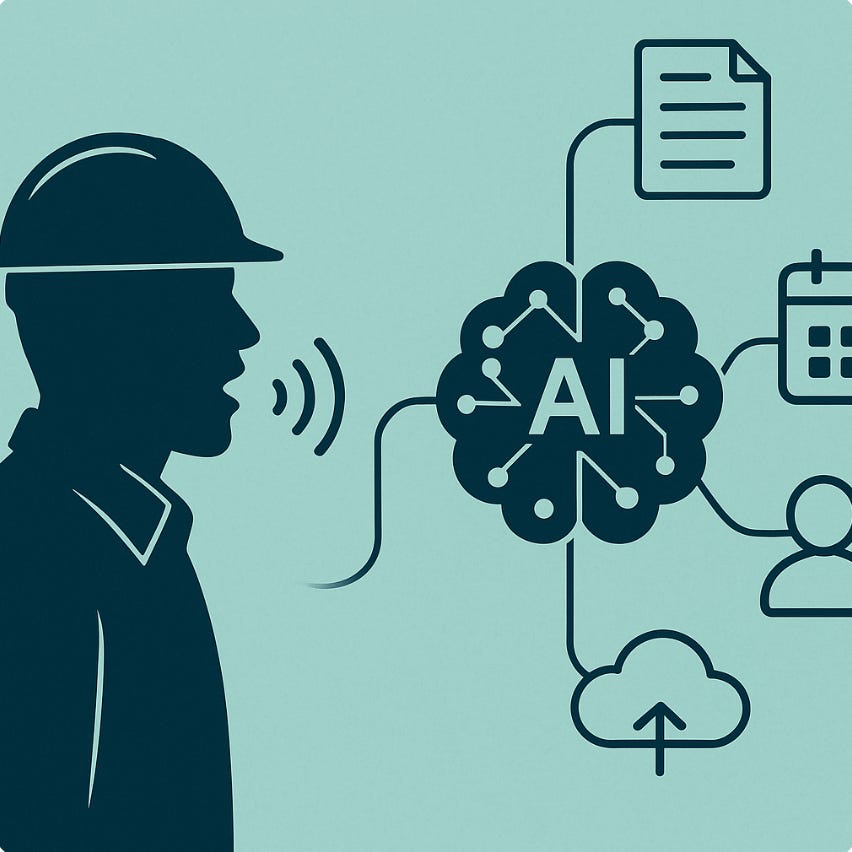
Despite $2T in annual spending, the construction and home-services sector faces a massive skilled-labor shortfall, forcing tradespeople to juggle hands-on work with administrative overhead. This admin overload is the silent profit killer. Industry surveys show that inconsistent follow-up and slow quoting cause up to 80% of inbound leads to evaporate before a salesperson ever speaks to a prospect. Field reps routinely lose one to two days each week to typing notes into CRMs, hunting for photos, and rescheduling missed appointments, exactly when speed-to-quote decides who wins a storm-damage roof or a water-heater emergency. Add 50% turnover in many front-office roles and a jigsaw of disconnected apps, and it’s no surprise that service companies leak precious revenue.
Three forces now make AI the logical next tool in the toolbox:
Rising demand collides with labor shortages, forcing firms to do more with fewer hands.
Large language and voice models can turn raw speech, images, or scribbled notes into structured data in real time, eliminating re-entry work.
Every tech in the field already carries a smartphone, so a voice or chat layer can slot into existing workflows without weeks of training.
The result: talk through an inspection, and an assistant instantly produces a polished estimate, updates the schedule, and logs the visit – no laptop required.
Cutting admin time pushes quote volume up and shortens the sales cycle. Faster estimates alone can lift booking rates by double-digit percentages, while automated reminders recover stale bids and surface maintenance upsells that boost lifetime value.
While dominant platforms like ServiceTitan have done an impressive job bringing end-to-end software to the trades – from scheduling and CRM to dispatch and payments – many of their workflows still rely on manual inputs from techs and office staff. In Reddit threads (like this one or this one or this one) and contractor interviews, a common theme emerges: the system is powerful but dense, and much of the admin still falls to humans. This creates a clear opportunity for AI layers that work alongside or on top of existing tools, reducing the workload without requiring teams to rip and replace their systems. Voice-driven copilots that handle quoting, follow-ups, or documentation aren’t just nice-to-haves – they’re the missing productivity unlock inside platforms that were never designed with ambient AI in mind.
The trades don’t need another dashboard, they need an invisible back office. Voice-driven AI that handles the grunt work will define the next generation of contractors: faster, leaner, and harder to compete with.