

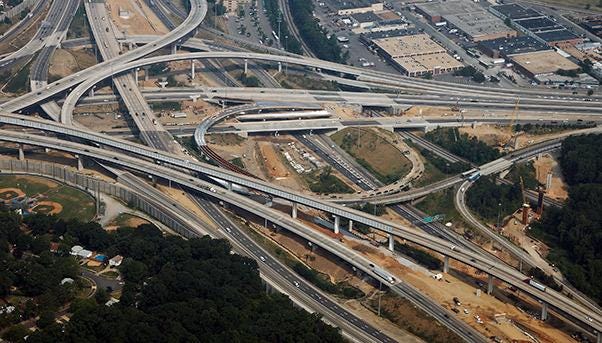
Public procurement is how a country’s infrastructure gets built. Governments collectively spend trillions of dollars each year buying goods and services through procurement contracts (everything from infrastructure projects to IT systems to basic supplies). U.S. federal procurement alone is over $700 billion annually. Add in state and local, plus other countries, and the total is estimated between $10-13 trillion globally.
Public procurement is one of the most important systems in the economy, yet the processes around it are deeply broken. Businesses waste billions just competing to win the RFQ. And a shocking number of these tenders attract only one bidder, or none at all.
This is due to a system designed for typewriters and filing cabinets, now straining under modern complexity. Mid-sized firms abandon opportunities because the process is too Byzantine. Global contractors deploy armies of specialists to decode requirements. Everyone loses: governments get fewer bids, businesses burn resources, and taxpayers pay the bill.
Why AI and Procurement Are a Perfect Match
Procurement is fundamentally a workflow problem, exactly where AI excels. Every tender follows the same pattern: digest requirements, craft compliant responses, coordinate teams, and meet submission deadlines. It’s cognitively intensive, but predictable.
Traditional software digitized only the surface by tracking deadlines and storing documents. The bottleneck is the intellectual work around understanding what agencies want, translating that into proposals, and ensuring compliance. For years it seemed impossible to automate, but AI is finally making it achievable.
The AI-Native Procurement Stack
Modern AI platforms are reimagining procurement through three layers:
Intelligent Document Processing: Tenders arrive as a mess of PDFs, spreadsheets, and scans. AI converts this chaos into structured intelligence (extracting eligibility rules, evaluation rubrics, and critical deadlines).
Content Generation at Scale: Instead of staring at blank pages, teams start with AI drafts tailored to requirements. The system analyzes tender language, pulls company history, and generates compliant, on-target responses. Writing time drops from weeks to days.
End-to-End Orchestration: AI agents coordinate the process: assigning tasks, tracking deliverables, ensuring compliance, even managing subcontractors.
The result is faster and better proposals. And teams are able to focus on strategy and differentiation instead of formatting minutiae.
Beyond Submissions: The Full Lifecycle
AI can impact many other parts of the public procurement stack beyond proposal writing. Below are just a few examples:
Smart Discovery: systems can monitor portals, surface relevant opportunities, rank them by fit, and flag emerging spending trends.
Strategic Intelligence: AI analyzes award data, competition, and pricing benchmarks, helping companies bid more strategically.
Post-Award Management: After winning the bid, AI streamlines compliance reporting, tracks performance, and flags issues before disputes arise.
Regulatory compliance and risk tolerance matter as much as content quality within public procurement. The winners will build purpose-built systems that understand procurement’s complexities. This means they will be able to navigate shifting regulations, coordinate multi-stakeholder workflows, and produce outputs that meet both technical and agency requirements.
The Trillion-Dollar Transformation & Beyond
We’re witnessing the early stages of a fundamental shift in how businesses interact with government. Those who embrace it will move faster, submit stronger proposals, expand their reach, and ultimately achieve better outcomes.
Beyond public procurement, the same AI infrastructure (document reasoning, workflow orchestration, compliance management) applies to adjacent, high-stakes processes:
Grant writing and subsidy applications
Regulatory submissions and compliance reporting
Contract monitoring and audits
All share the same pain points: opaque requirements, manual workflows, fragmented information. The AI systems transforming procurement today will power tomorrow’s broader transformation of business-government interactions.
Fantastic analysis!